









30 Journalists Trained to Expose Corruption and Demand Accountability
Corruption continues to rob Ghana of development and of its future, but a new army of journalists has been equipped to fight back. From September 23 to 25, 2025, the Media Foundation for West Africa (MFWA), in collaboration with the German Development Cooperation (GIZ) and other partners, trained 30 journalists from across the Greater Accra, Ashanti, and Northern Regions in investigative journalism and anti-corruption


By Joylinda Laryea / 27 September 2025
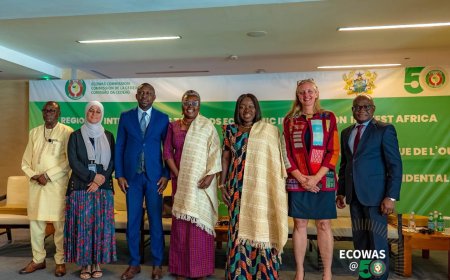
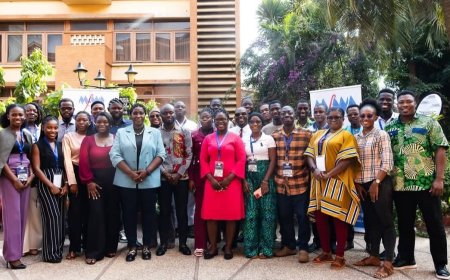
Corruption continues to rob Ghana of development and of its future, but a new army of journalists has been equipped to fight back. From September 23 to 25, 2025, the Media Foundation for West Africa (MFWA), in collaboration with the German Development Cooperation (GIZ) and other partners, trained 30 journalists from across the Greater Accra, Ashanti, and Northern Regions in investigative journalism and anti-corruption reporting at the Sunlodge Hotel in Tesano, Accra.
The training marked the first phase of a three-part initiative under MFWA’s flagship project, “Countering Corruption Through Accountability Journalism and Improved Freedom of Expression Environment in Ghana.” It focused on building journalists’ capacity to investigate corruption, decode complex governance systems, and expose wrongdoing with professionalism and ethical precision.
Delivering the opening remarks, Rosemond Ebi-Adwo Aryeetey, Senior Programme Manager for MFWA’s Media for Democracy and Good Governance, set the tone with a powerful message about MFWA’s vision.
She noted that the organisation’s long-term mission is to “nurture a new generation of fearless and ethical investigative journalists dedicated to the public interest.” According to her, the training is designed to upskill journalists and sharpen their ability to expose corruption, demand accountability, and protect public resources.
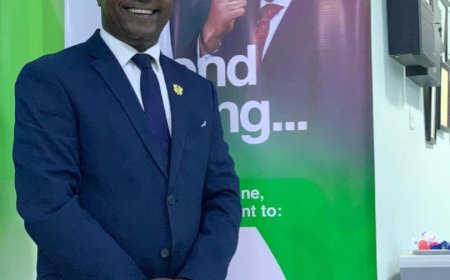
Kweku Lartey Obeng, Component Manager at GIZ Ghana, reinforced this commitment during his address, emphasising that “a free, vibrant, and empowered media is not a luxury for democracy, it is its lifeblood.” He highlighted that through the PAIReD programme, co-financed by the EU, BMZ, and SECO, GIZ is investing in strengthening governance systems by promoting accountability journalism and civic participation.
Trainers and speakers explored the roots, forms, and impact of corruption in Ghana, Ghana’s performance on corruption indices,Procurement and contract-related corruption, Legal and institutional anti-corruption frameworks sessions led by Mr. Michael Boadi of Transparency International Ghana.
Mr William Nyarko of the Africa Centre for International Law and Accountability (ACILA), also schooled participants on investigative methods, data sourcing, hypothesis development, whistleblower protection, and artificial intelligence tools in journalism.
The journalists engaged in practical sessions, including story pitching and identifying story leads. A deep-dive experience-sharing segment, led by Seth Bokpe of The Fourth Estate, dissected the process of exposing corruption and highlighted the emotional toll investigations can take. He emphasised the need for mental resilience and professional support.
Participants described the training as impactful, practical and deeply empowering. In conversations with some of them, they shared how the sessions have transformed their work and strengthened their resolve as accountability journalists.
“My experience in the MFWA's investigative journalism training was a transformative one that has fundamentally upgraded my approach to reporting. Moving beyond traditional methods, we dove deep into the tools essential for modern accountability journalism. I learned to meticulously verify information using digital forensics, to protect my work and my sources in an increasingly hostile digital landscape, and to frame investigations within a robust ethical framework. The focus wasn't just on finding the story, but on telling it compellingly and securely, ensuring it makes a real impact. I am now confident in applying these advanced techniques to uncover corruption, expose injustice, and contribute to a more transparent society.” — Ewurama Attoh, Diamond FM, Tamale
Another participant said the experience was eye-opening and highly practical, stressing the need for more capacity-building of this kind. “The experience was enlightening and highly engaging, providing practical insights. With this training, I am now equipped to undertake investigative reporting that can contribute to the betterment of my community. I sincerely hope that the Media Foundation for West Africa (MFWA) secures additional funding to train more journalists in this important field.” — Bashiru Nuhu Bapagu, Radford 107.5 FM, Tumu
Others described the training as both inspiring and empowering, with renewed courage to pursue accountability reporting. “I’ve just concluded a powerful three-day training on investigative journalism and anti-corruption. The experience was eye-opening and deeply impactful, equipping me with sharper tools and renewed courage to pursue truth, accountability, and transparency. As journalists, our duty is not only to inform but also to uncover, challenge, and inspire change. This training has strengthened my resolve to shine light where shadows fall and to add greater value to my work, for the people, for justice, and for a more accountable society.” — Alidu Isaiah, ZAA Multimedia, Tamale
Other participants expressed similar sentiments, praising the programme for deepening their understanding of corruption, strengthening their investigative techniques and renewing their commitment to accountability reporting. They highlighted the relevance of the sessions to their daily work and expressed hope that more journalists across the country would benefit from such training.
Paul Kofi Gozo of the Media for Democracy and Good Governance Programme at MFWA played a crucial coordinating role throughout the training. He not only ensured that participants were fully catered for and comfortable but also contributed intellectually during sessions.
Paul emphasised that corruption is not just a governance issue but a societal problem that deprives communities of development, health, and justice. He urged journalists to remain bold, factual, and persistent in uncovering wrongdoing and see themselves as agents of change and watchdogs for the public good. Participants expressed heartfelt appreciation for his dedication, guidance, and engagement throughout the training.
The journalists have been tasked with developing and pursuing story ideas that will expose misuse of public resources. The next phases of the initiative will focus on training in data journalism, RTI law, and fact-checking.
In a country where corruption drains national potential and silences accountability, MFWA and its partners are betting on journalism as the weapon of reform. And for these 30 journalists, the journey to challenge power and protect the public purse has just begun.
What's Your Reaction?
 Like
2
Like
2
 Dislike
0
Dislike
0
 Love
0
Love
0
 Funny
0
Funny
0
 Angry
0
Angry
0
 Sad
0
Sad
0
 Wow
0
Wow
0